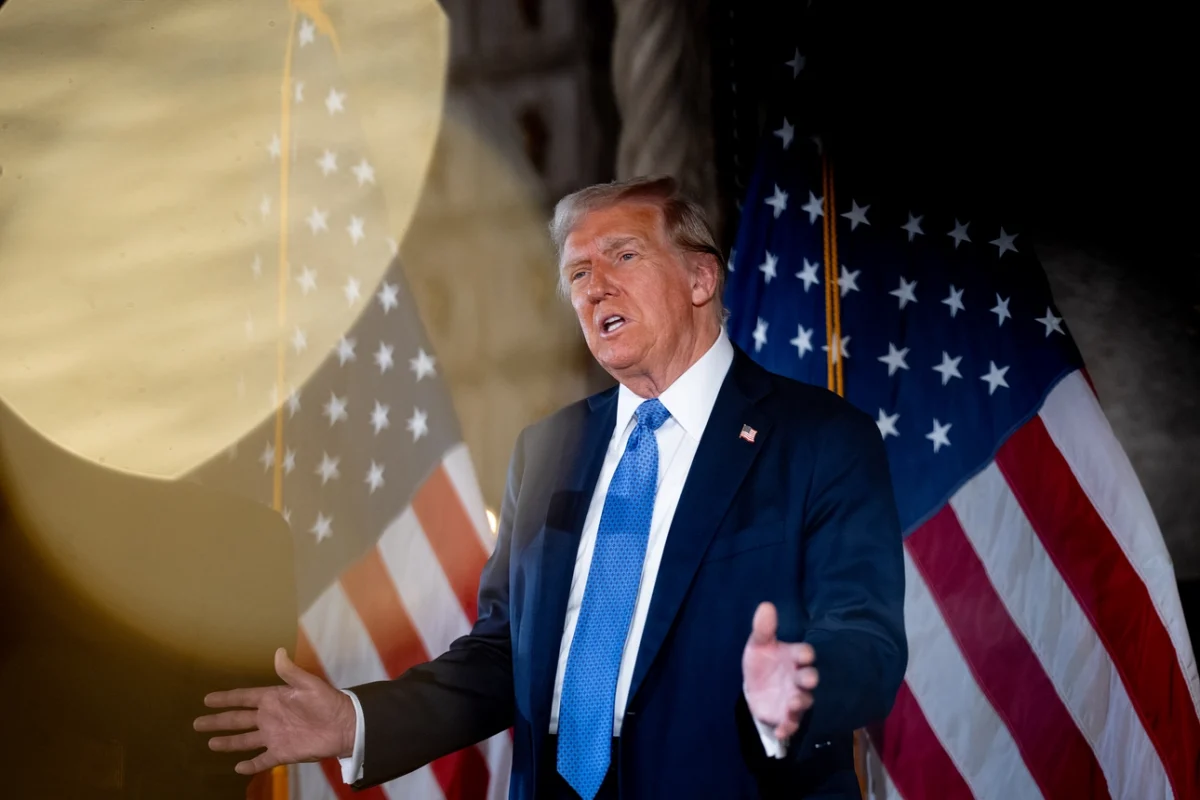

Donald J. Trump recently had an interaction with a news reporter during a press gaggle before he boarded Air Force One on Nov. 14. 2025. The news reporter Catherine Lucey was called a “piggy” after asking a follow up question regarding the Jeffrey Epstein files and related emails, President Trump clearly did not like the question and responded with “Quiet, piggy”. This is not the first time Trump has insulted reporters. He has had a long pattern of harsh language toward journalists, including phrases like “fake news,” “terrible” and “stupid,” along with other personal attacks as well.
A White House spokesperson defended the remark. Trump’s press secretary said that the president’s directness and “frankness” are why his supporters appreciate him, framing the remark with frustration as an expression with what he sees as unfair questions.
Supporters view Trump’s blunt style as authenticity, while critics view it as abusive and destabilizing. Trump used an ableist slur against Minnesota Governor Tim Walz. In a social media post on Truth social, Trump referred to Gov. Walz using the slur “seriously retarded,” which is widely considered offensive and derogatory toward people with disabilities intellectually. Slurs are broadly condemned because they demean individuals with disabilities and perpetuate stigma.
When asked if he stood by the comment, Trump doubled down. Asked by a reporter whether he stood by the use of the offensive word, Trump said “Yeah, I think there’s something wrong with him, absolutely sure.” Instead of retracting or softening his language when challenged, Trump reiterated a negative personal judgement, which amplified the controversy.
Comedy and commentary responded strongly. Late-night hosts like Jimmy Kimmel have mocked and criticized Trump’s “piggy” remark, arguing it reveals a broader problem with how the President reacts to scrutiny. Comedians often use satire to highlight perceived flaws in public behavior; these reactions can shape public perception. Taken together, these past few incidents involving Trump using the word “piggy” to describe a reporter and the “R-word” referring to Minnesota governor Tim Walz, illustrating a broader pattern in contemporary political disclosure that goes above insults.
These moments were not just about derogatory language, they reflect how power, accountability and norms of respect are negotiated in public life. When a President uses demeaning language towards a journalist, governor or any sort of political power, it signals hostility toward the press’s role in asking certain questions to the authority. For many critics, this undermines the idea of a independent and free media, which is essential to democratic governance. Similarly, the use of an ableist slur against Walz carries implications that extend far beyond a personal attack on a political opponent. People with disabilities and many members of the public view such language as harmful because it stigmatizes people with intellectual and developmental disabilities, rebuilding stereotypes that society has worked for decades to break down.
Trump’s doubling down rather than retracting the statement that intensified backlash perceptions that cruelty and provocation are being used as tools politically. Regardless of where one stands politically, the situation demonstrates how language from powerful figures can ripple outward, affecting journalist’s dignity and the overall tone of public debate.
Language from political leaders sets the tone for the public discussion. If we want a government rooted in truth and respect, we must call out harmful power of speech no matter who says it and support a new normal that protect a free press and civil debate.