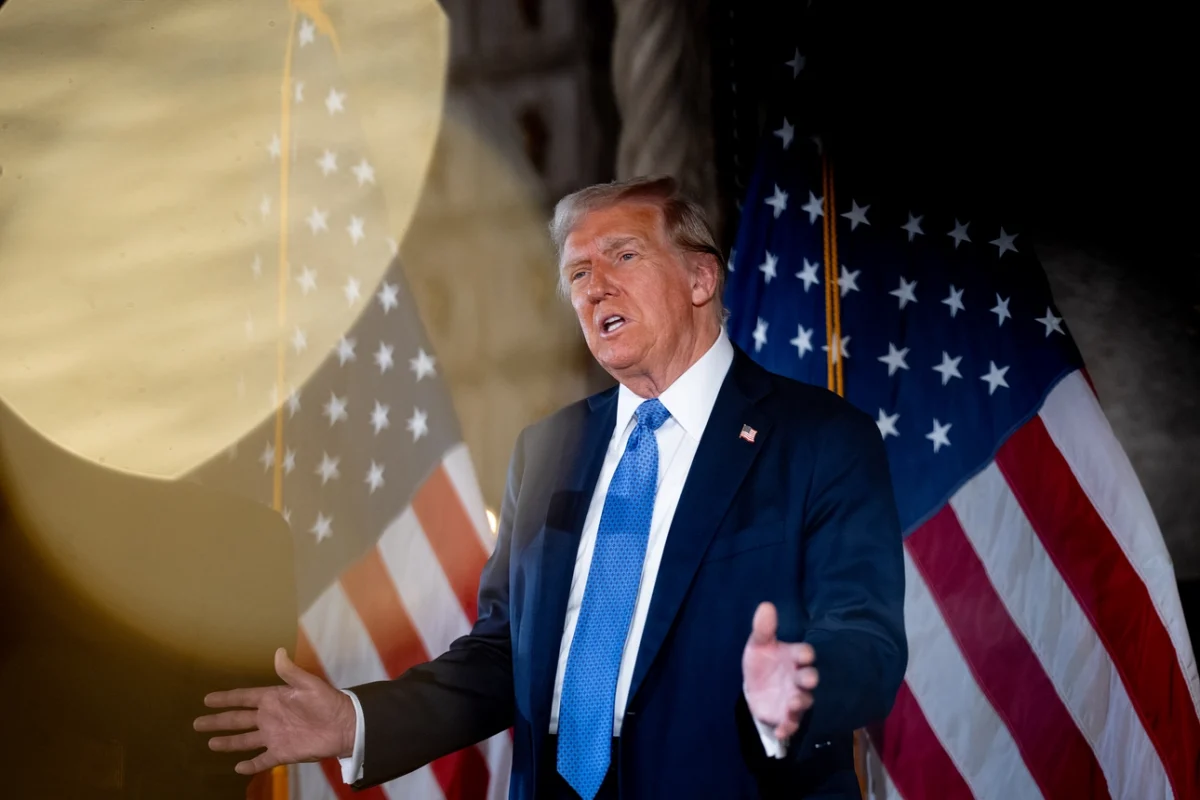
On April 2, 2025, President Trump announced a 10% tariff on all imports, with an even higher percentage on certain countries. These later went into effect on April 5, 2025. On Feb. 20, the Supreme Court voted against Trump’s illegal tariffs with a vote of 6 to 3. This was a major step in the right direction of maintaining checks and balances on the president.
Checks and balances are a system adopted by the Founding Fathers with the hope of creating a system of equal governing within the three branches. This limits power, making sure that not one branch holds all power over legislation. With Trump’s recent tariffs, many question what went wrong and how he got this much power.
Government teacher Matthew Bergquist talked about how an active Congress was needed; they have to put the needs of the people over the needs of political parties.
Checks and balances are one of the many laws the government has to follow to maintain democracy. With recent changes to government policies, including the recent ICE raids, many laws and rules have been adapted and changed, and the question of whether federal papers are outdated. These raids and changes to policies have diminished the balance in the government, and in turn led to the recent conflict with Iran.
With recent administrations, the governing system is appearing to be a little bit outdated, with there being more of a struggle to compromise and make decisions. This was seen in the longest government shutdown lasting 43 days in October and November 2025. This was a big failure of the administration and added to the list of laws and codes that go unchecked.
“It is fair to say that the traditional governing system is out of sync as the federal courts were never intended to be bombarded with legal suits and challenges and required to make quick judgments on key policy issues,” Dr. Michael Kryzanek, a professor at Bridgewater State University, said.
The governing system has most definitely changed within the last few decades. With an uprise in tariffs and large legal decisions, the government has to maintain balance and control.
Removing and lowering tariffs can be very helpful in the United States, as it eliminates competition for resources and fosters good relationships with foreign countries. Currently, amid the war in Iran, gas prices have skyrocketed, so lowering tariffs and decreasing global conflict will significantly improve the U.S. economy. This method can be very effective in removing Trump’s illegal tariffs.
“Strictly speaking, removing or lowering tariffs is a good thing in the sense that it is a tax cut for firms that pay tariffs, or consumers to whom the cost can be passed on. By the same token, the government will be ruing a potential loss of revenues,” economist George Magnus from Engelsberg Ideas said.
Tariffs were never meant to be this harmful, and to improve the U.S. economy, which was one of the main goals of the Trump administration, removing and lowering tariffs will boost tax cuts.
CNN reporters John Fritze, Devan Cole and Elisabeth Buchwald talked more about the president’s power and the Supreme Court. The Supreme Court on Feb. 13 ruled that President Donald Trump violated federal law when he unilaterally imposed sweeping tariffs across the globe, a striking loss for the White House on an issue that has been central to the president’s foreign policy and economic agenda.
Government teacher Brady Hannigan talked about the different branches and added, “I think that, and it’s more of our are the checks being used, or…just because President can’t pass a law. Only Congress can. Presidents can’t do things. It’s whether or not they can do an executive order, but a Congress can shoot it down.”
The goal of checks and balances has always been to maintain balance between branches. With a rise in large decisions made in the executive branch, the government needs to slow down and make decisions together. These checks need to be used more effectively and more quickly.
In light of the recent success of the Supreme Court vetoing President Trump’s illegal tariffs, it is important to keep track of the power distributed between branches of government so that one branch does not have too much power to make large decisions, such as the tariffs. If new laws and codes are put into place to limit presidential power, the government will be more in control and come to more agreements. With the recent war with Iran, it is also important to keep track of government contracts to maintain control.


