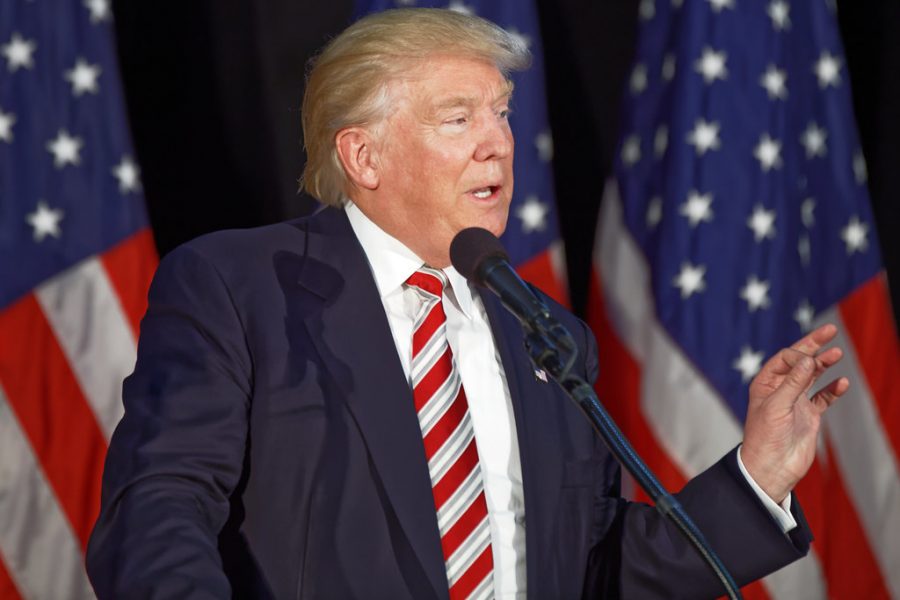
Concerns about President Donald Trump’s mental acuity have grown following a recent nationwide poll. A Reuters/Ipsos survey found that 61% of Americans believe Trump is “becoming erratic with age,” including nearly one-third of Republicans, showing that worries about aging leadership extend beyond partisan politics. The poll suggests that concerns about aging leadership are not limited to one political party. Questions about whether older presidents can handle the intense demands of the office have increasingly become part of the political conversation.
The issue of age in leadership is not new and extends beyond one president. During the 2024 election cycle, both Donald Trump and former President Joe Biden faced scrutiny as the oldest presidential candidates in U.S. history. Biden, who took office at age 78, was frequently questioned about his memory, speaking ability and physical health while in office. These concerns helped bring national attention to whether age should play a larger role in determining who is fit to serve as president.
A writer from Ipsos said, “public concern about cognitive fitness in leadership is increasingly bipartisan and not confined to one candidate or party.”
The Constitution currently sets only a minimum age requirement of 35 to become president, with no maximum age limit. This means voters are responsible for deciding whether a candidate is fit for office, regardless of age. Some experts argue that this system protects democracy by allowing voters to choose freely, rather than limiting candidates based on an arbitrary number. At the same time, others point out that the Constitution was written at a time when life expectancy was much lower, and modern demands of the presidency are far more complex than they were in the 18th century.
Still, supporters of an age limit argue that the presidency is one of the most demanding jobs in the world and requires sustained mental stamina and quick decision-making. The president oversees the military, responds to international crises and manages complex domestic issues. Because the stakes are so high, some experts argue that clearer standards for health and fitness could help maintain public trust in national leadership.
Supporters of a presidential age limit believe the issue is about risk management rather than personal criticism. Many professions with high levels of responsibility, such as airline pilots and certain military roles, require health evaluations or retirement ages to ensure safety and effectiveness. Advocates say similar expectations could apply to the presidency without targeting any single individual, but instead focusing on protecting the country as a whole.
At the same time, critics argue that age alone is not a reliable measure of a person’s ability to lead. Some leaders remain effective well into their seventies or eighties, while others may struggle at younger ages. Experts also warn that judging a public figure’s mental fitness based on speeches or media clips can be misleading. Ethical guidelines discourage diagnosing individuals without proper evaluation, meaning much of the public debate may rely more on perception than medical fact.
Critics also emphasize that elections are the most appropriate way to judge a candidate’s fitness for office. In a democracy, voters have the power to decide whether a candidate is capable of serving. Adding an age limit, they argue, could remove that choice and unfairly disqualify experienced leaders who are still capable of performing the job effectively.
In the end, the debate over presidential age should not be about attacking any one leader but about protecting the stability of the office itself. The presidency requires crisis management and the ability to respond quickly to global events. While experience and wisdom are valuable qualities in a leader, the physical and mental demands of the job are enormous. For that reason, the United States should seriously consider establishing a reasonable age limit for the presidency, similar to retirement expectations in other high-responsibility professions. Doing so would not be about disrespecting older leaders, but about ensuring that the person holding the nation’s highest office is fully capable of meeting the responsibilities that come with it.


