
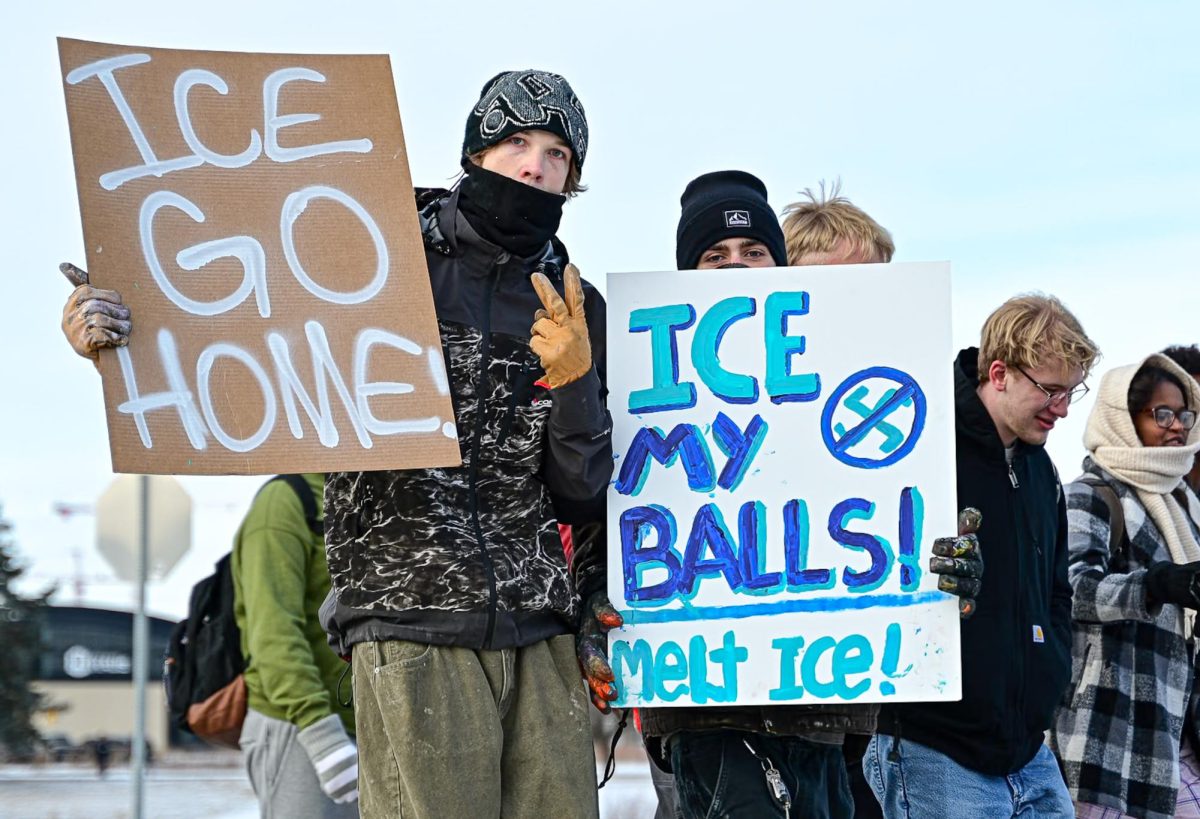
Students walked out of class to protest ICE’s presence and actions in Minneapolis and Stillwater on Jan. 20 at 2 p.m. Around 200 students walked out and around the school’s parking lot with signs, chanting various anti-ICE chants. The demonstration aimed to draw attention to the effects of federal immigration enforcement on local families, students and staff.
In the weeks leading up to the walkout, two U.S. citizens were fatally shot by immigration agents in Minneapolis, raising concerns about civil rights and public safety. At the same time, approximately 3,000 ICE and Border Patrol agents were deployed to the Twin Cities, according to National Today, outnumbering local law enforcement and increasing tensions within the community. These events prompted protests across Minneapolis and surrounding areas, including arrests, detentions and public demonstrations opposing the expanded federal presence.
Student-led protests like the Stillwater walkout brought increased media attention to the issue and encouraged a wider range of discussion. Junior Maddy Bonilla, who participated in the walkout, said the protest “can encourage other schools to do the same,” adding that if it makes even one person feel safer, “then that’s good.”
Students were not alone in this, according to USA News. Thousands of protesters took to the streets in Minneapolis and students across the United States staged walkouts in demand of the withdrawal of ICE from Minnesota.
Despite widespread demonstrations, ICE operations have largely continued without major policy changes. Sophomore Val Vierling, who chose not to participate, offered a different perspective of the impact of student-led protests, “I think it’s good. It doesn’t always make a huge difference, but it definitely adds to it,” she said.
Even if students chose not to walk out, some still showed their support in other forms, like posting on social media, educating others and doing community outreach work such as delivering groceries.
Communities are also saying that the increased federal presence has created fear and confusion, according to WCCO. This largely stems from frustration due to the lack of policy change as well as acknowledgement from the school.
Senior Kylie McDermott, who helped organize the walkout, expressed her concerns, saying, “How many weeks and months and days and hours are we going to waste twiddling our thumbs?”
In addition, Bonilla said many students, especially those with immigrant family members, are feeling unsafe going out in public or even coming to school because of the growing fear within the community.
Although policy shifts have been limited, some students said the walkout helped create a sense of connection and support within the school. Bonilla described the experience as “really uplifting and inspiring,” adding, “I saw all different kinds of people there, and it was really powerful.”
Overall, the walkout reflected growing concern over ICE’s expanded presence in Minnesota and its impact on students, families and staff. While protesters sought to raise awareness and encourage action, federal enforcement policies largely remained unchanged, highlighting the divide between community members calling for safety and accountability and authorities prioritizing enforcement.