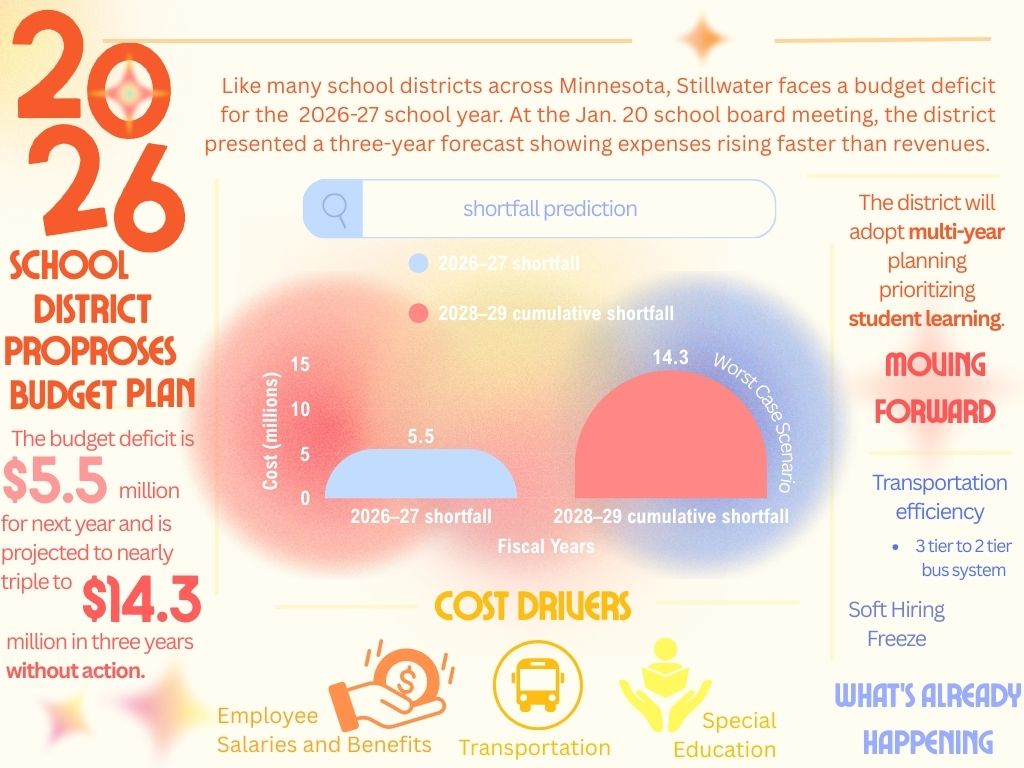
The Stillwater district school board recently announced at their board meeting on Jan. 20, a $5.5 million deficit for the next school year. This deficit could impact future financial decisions and budget cuts, along with layoffs or programs being cut, throughout not only the high school, but the entire school district. The budget shortfall that is expected for the 2026-2027 school year will impact many within the community as well, because it could invoke higher taxes to raise revenue growth in order to lessen the deficit.
The rise of inflation, employee salaries and benefits, transportation costs, special education needs, legislative changes that impact revenue or expenditures, unfunded mandates, one-time funding sources that expire after a set period, enrollment changes and rising operational costs are outpacing revenue growth within the district. Inflation causes a rise in costs that are a necessity for keeping the schools running, while fixed-funding struggles to keep pace.
“It’s important to note that this is an early forecast, and factors like enrollment, contract negotiations and state funding could still impact our bottom line. Staff is using this information to begin important budgeting conversations about how we prioritize spending, plan for long-term sustainability and look for efficiencies where possible,” Chief of Staff Carissa Keister said.
Since the pandemic Stillwater has lost a lot of enrollment and in Minnesota, schools are paid per student. This means if fewer students are enrolling, less money is being brought in. The amount of people and staff a district has can be a leading contributor to where money is being placed.
The district’s position is not different then many in the Twin Cities facing the same struggles and issues. Minnesota has seemed to not keep pace with inflation, so districts are expected to meet mandates without the extra money that is needed to keep a school thriving. Budget cuts are also very common to public schools, and last year our district had to similarly cut $5 million from the budget.
Keister explained that Stillwater is not alone. School districts in Minnesota are all having similar budget challenges. Over the past year, metro-area school districts faced a combined shortfall of over $280 million. The underlying pressures of rising costs, limited revenue growth and expiring one-time funding are affecting many districts across the state.
Circling back to the pandemic, during COVID many districts used federal relief money to cover costs. These funds are either mostly or all spent, leaving schools in debt with no backup plan other than to cut programs and raise taxes to try to make back revenue.
According to Fox News, Stillwater schools are “brainstorming ways to make up 3% of the school systems budget,” because “Administrators have exhausted their one-time pandemic-era COVID-19 relief funds.”
District leaders are looking into the budget to find out what is causing this deficit and money loss, while also carrying on with supporting students and staff through this process. There will be another meeting with the school board on Feb. 16th, details of these finding that will be shared, the final decisions and adjustments will be made in spring. The school district will do their best to focus on protecting student support and learning. The district also plans on keeping the community updated on any new reports or changes to budget planning in the future.