

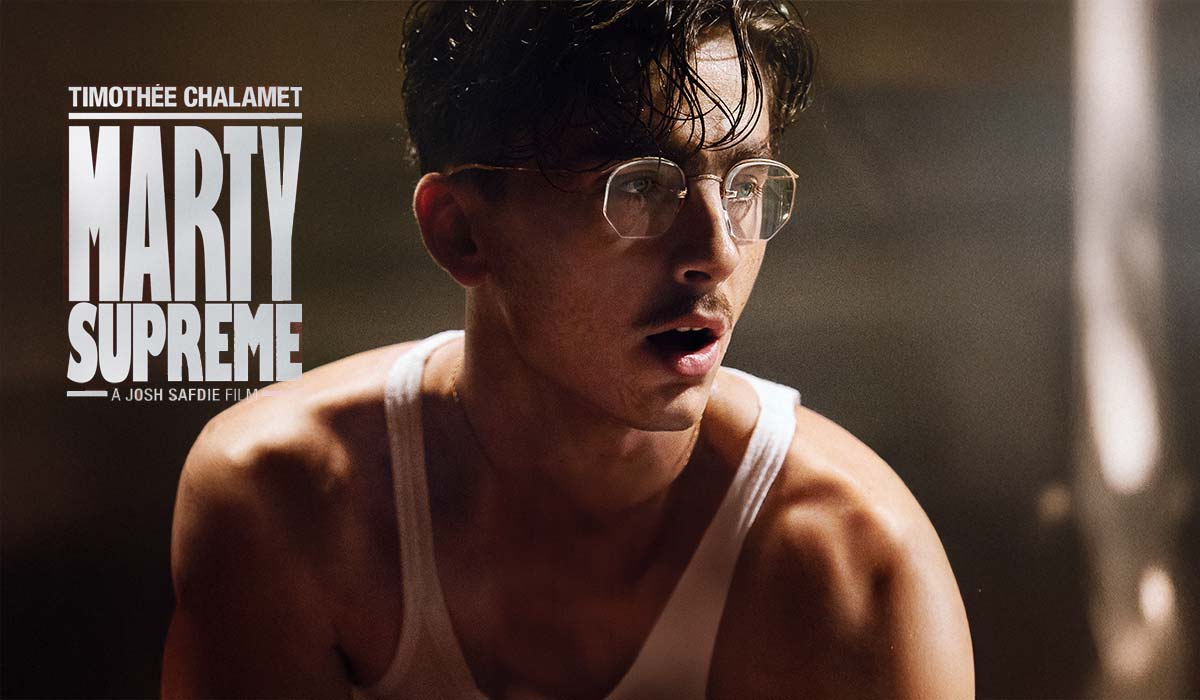
“Marty Supreme” does not feel like a typical film so much as an experience into the obsession of an alternate person, and that is what makes it so intriguing to observe. As a young viewer myself, I figured that “Marty Supreme” would be an interesting film, filled with emotional interests and memorable scenes largely in part to its intensity and uniqueness, though it can be somewhat difficult to watch. This can be seen especially in scenes set in the underground table-tennis clubs, where camera movement focuses greatly on the face and hands of Marty rather than capturing scenes of the environment. This immediately makes it known how much the film is an obsession for him. The film is confident in its artistic approach and relegates none of these traditional narrative approaches or filmmaking styles. This can be an important reason for its appeal to young viewers, as they can experience something so fresh and dynamic.
In reviewing “Marty Supreme”, I will address the overall quality of the film regarding acting, pacing and style to help define any positives or negatives of the film’s style and intensity, and how each of those elements exists to leave the viewer feeling either intimidated or overwhelmed. The pacing, or the manner in which the scenes flow together, works to be overwhelming within the tournament scenes, particularly how the matches are amplified with quick cuts and sounds that blend together to give the notion that Marty has little time to breathe. While certain scenes drag on a bit too long, such as the scenes in which Marty spends alone after a victory or defeat, the notion that the pacing spends a great deal of time in such a manner helps to detract from the negative attributes in order to consider the overall analysis favorable.
The emotional impact of “Marty Supreme” is best felt in the scenes where spoken lines are minimal. One example of this can be seen when Marty is preparing to play in an important match in almost complete silence, punctuated only by the sound of his paddle and breathing. Close-ups of Timothée Chalamet’s face reveal his nervous confidence and desperation at the same time, and it is easy to see how the viewer is able to connect and feel his pressure without being narrated to. Intense moments are felt later on, where aggressive sound effects and fast movements of the camera are used to show his wins and defeats in his games. As a viewer, I felt his anxiety, his excitement and his frustration.
The emotional core of the film comes from Chalamet’s portrayal, such as when he plays scenes where Marty’s confidence seems to feel more like performing than anything else. When he acts around other people, people who are basically his enemies or people he needs to get past. Chalamet goes through small body changes and attitude changes that show how Marty is always proving himself, whether or not he needs to prove himself. This makes the character feel more endearing and more human, so the film does not just explore the concept of ambition; it becomes an immersive experience for the viewer.
Especially for younger viewers, “Marty Supreme” is a film worth checking out since it shows them that movies can be difficult and emotionally taxing without being pointless or forgettable.


