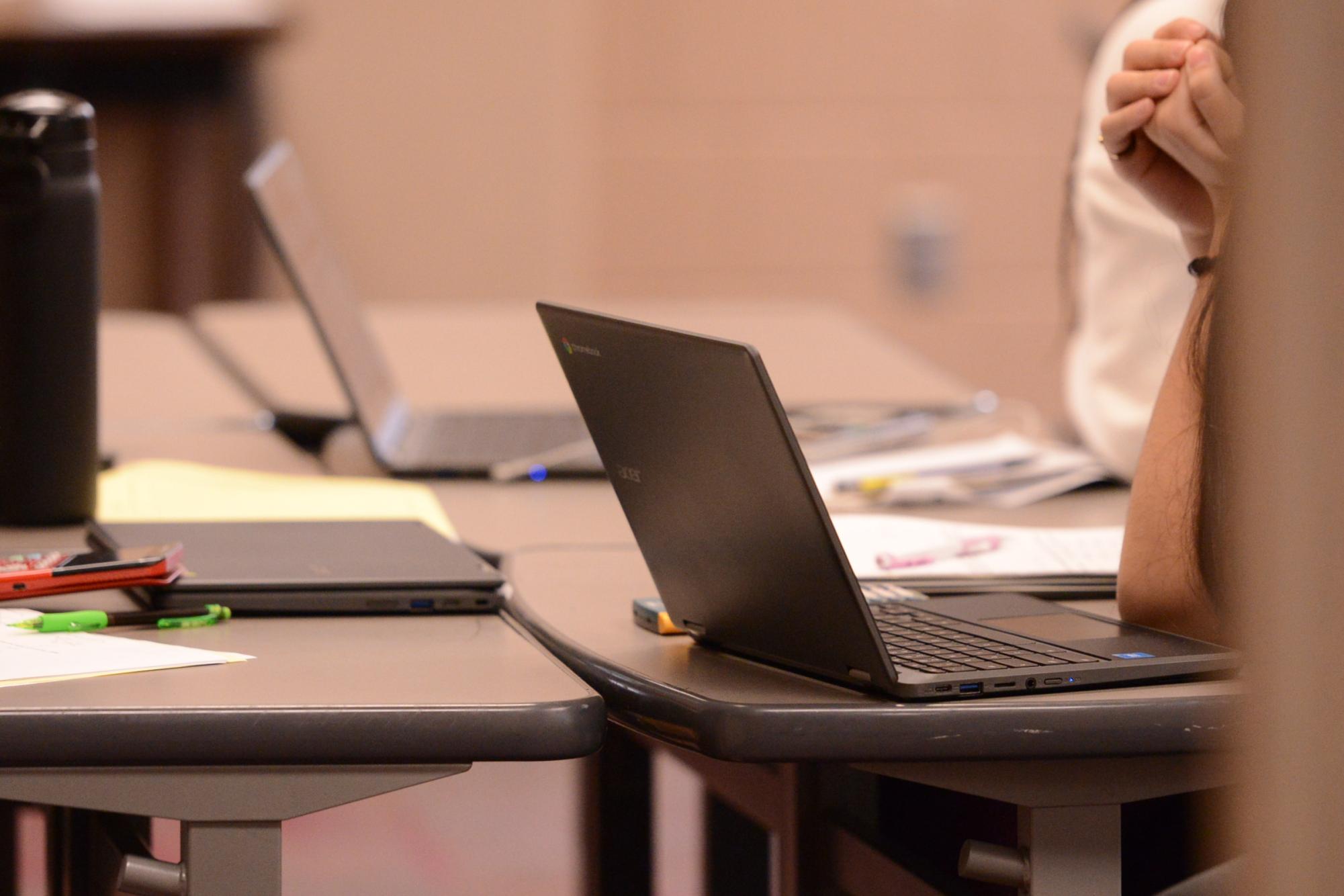

The high school staff should be more open to students having more choices in which device they use to complete their coursework. For students who rely on more powerful software, Chromebooks can be limiting because they do not support the programs needed to build deeper skills in design, engineering or creative projects. Allowing personal devices could help students learn real-world tools and be better prepared for college or future careers.
“The Chromebook cannot do a lot of the programs that we run down here… if you’re doing the CNC plasma, CNC router, CNC lathe and the CNC mill, we need access to more complex systems, design systems that we can’t put on the Chromebook,” Brad Pike, industrial technical engineering teacher, said.
Students who are limited to school-issued devices that can not run
advanced programs are not able to dive deeper into more advanced projects or build skills that matter for their future. Learning industry standard software helps students improve both technically and creatively. Without the right tools, students’ learning is restricted, leaving them less prepared for college or the workforce.
Pike explained that students using more powerful devices tend to be more engaged and motivated, pushing themselves creatively and technically as they take greater ownership of their learning.
Stronger computers also prepare students for college and careers where programs like Adobe, Fusion and SolidWorks are standard.
“For colleges, you always use MacBooks… it’s better for your future because you’re going to probably use a MacBook throughout your life,” senior Isabella Stewart said.
Using personal computers creates unfair advantages since not all students can afford high end devices. The school provides Chromebooks so everyone has equal access. Social studies teacher Wayne Perkins feels students should “absolutely not” use their own devices.
“One [reason] is that this community just invested a lot of money to make sure every student has access to a Chromebook… [The] second reason is equity and equality. Not everyone has the same access to resources to procure a MacBook… that puts some kids at a competitive advantage,” Perkins said.
Personal devices can also be distracting. While some students who use their own computers responsibly are more focused than when using Chromebooks, allowing all students to bring personal devices could make it easier to get off task.
“Students pay attention and stay focused for the most part, but allowing them to choose their own devices hinders their engagement and makes them more likely to be distracted if they have other tools at their disposal,” Perkins added.
Taking into account all the evidence for and against allowing students more choice in the devices they use for coursework, a solution could be to let students use their own devices for formative work, while requiring them to use school issued Chromebooks for summative assessments. This approach would give students the chance to practice with professional software and build real world skills, while still allowing teachers to fairly and consistently evaluate students’ ability to complete summative assessments.