
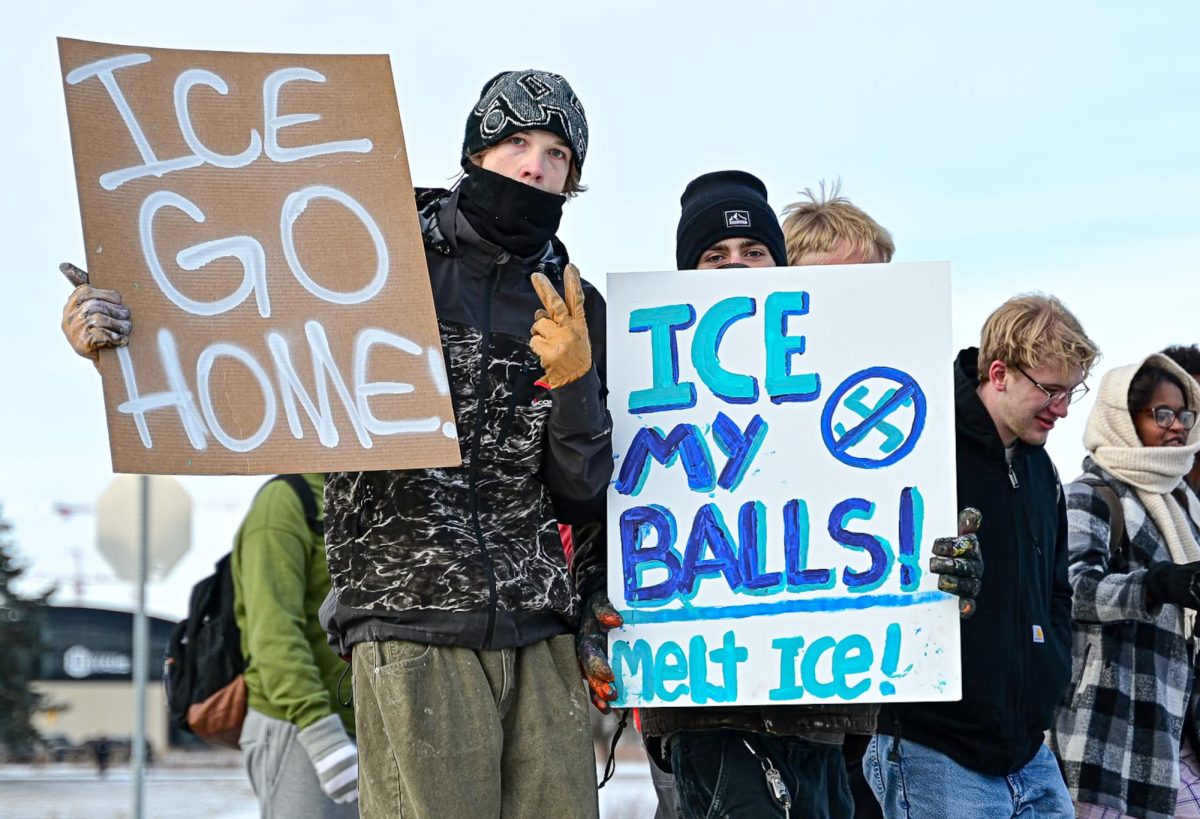
The controversy between the political right and the left in the United States continue to create serious problems, including increased polarization, misinformation and a lack of productive dialogue. While many protests begin peacefully, some have escalated into conflict, deepening mistrust between the two sides. Because the right and left often disagree on what actually happened during these events, tensions continue to grow. These problems are intensified by media outlets that frequently portray their own side as morally correct while ignoring opposing perspectives, making resolution and compromise more difficult.
Political polarization in the United States has increased over the past several decades, with Americans becoming more divided along ideological lines. According to research from the Pew Research Center, Democrats and Republicans are now further apart on major issues such as immigration, media trust and government power than at any point in recent history.
This growing divide has led to an increase in partisan media, where news outlets often present information that supports one political viewpoint, making it harder for the public to access balanced and objective reporting. As a result, many voters rely on sources that reinforce their existing beliefs rather than challenge them, which contributes to misunderstanding and conflict.
The Fairness Doctrine was eliminated in 1987 which once required news outlets to present both sides of political issues in a balanced way. When this rule was removed, news media shifted towards opinion-based programming.
They lifted the rule that media has to be neutral and that created 24 hour commentary shows in echo chambers english teacher Rachel Steil explained.
Most politicians carefully manage their public image through media teams, speeches, rights and campaign strategists, meaning what voters see is often a constructed version of a person rather than their full or true personality.
“I’m not sure how much of a politician’s true personality the public actually sees, because much of what the public sees is staged to present an image that the team wants that politician to have,” social studies teacher Matthew Kiedrowski explained.
Elections tend to reward people who enjoy being in the spotlight, which can leave out many qualified leaders who may not seek attention. Studies have shown that systems like random selection (lotteries) and smaller leadership groups can sometimes create more inclusive and effective representation.
“At smaller levels of government, such as student councils, using a lottery system has been found to be more successful than traditional elections,” social studies teacher Brady Hannigan said.
The significance of polarization in America is that the ICE enforcement policies have increased fear among immigrant families across the United States, especially in school communities. This fear can lead to students missing school and parents avoiding work, which causes food and housing insecurity.
“We are seeing a significant number of students afraid to come to school, and if parents are afraid to go to work, we’re seeing a lot of insecurity,” Steil said.
In the end, fear in immigrant communities, biased media and staged political images all affect how people understand politics. These issues can make it harder for families to feel safe, for people who are voting to trust the leaders and for the public to get accurate information. Paying attention to fairness and representation could help create a more informed and secure community.